When Matt switched his medical care for psychosis to Boston Medical Center, he noticed a welcome change: more time.
“I didn’t feel judged or rushed,” said Matt, about his care at BMC’s Wellness and Recovery After Psychosis (WRAP) outpatient program, which specializes in tailored psychosis treatment. “With my previous hospital, I often felt rushed to find the right type of medication and be in a certain type of routine, especially with therapy.”
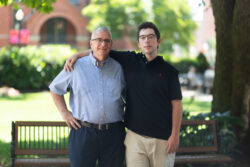
BMC patient Matt, at right, with his dad, Jim.
More patients will benefit from WRAP’s approach to working with patients and families thanks to a recent $5 million gift to BMC’s Department of Psychiatry from the Boston-based Jack Satter Foundation, a long-term supporter of BMC. The multi-year gift to strengthen and expand BMC’s psychosis clinical care, research, education and outreach will allow more patients to find a path to recovery with a highly skilled and caring team.
Tailored Care for Unique Cases
True of most medical conditions, there’s no one-size-fits-all experience or treatment for psychosis, which can initially present with auditory or visual hallucinations, disorganized speech, and social withdrawal, among other symptoms often mistaken for anxiety or depression. About 100,000 young adults in the U.S. experience their first episode of psychosis each year, with WRAP’s expert team of psychiatrists, psychologists, nurse practitioners, social workers, and more treating 636 patients last year.
“Flexibility and meeting the patients ‘where they are’ are crucial parts of treatment,” says WRAP Director Hannah Brown, MD, who oversaw Matt’s treatment when he became a BMC patient in 2022. “Building rapport and trust with patients is critical, or we can lose the opportunity to work with them,” Brown says.
First episodes of psychosis often begin at a key development stage in life, young adulthood. “It can be debilitating, but people also recover,” Brown says. “That’s the important thing: With treatment, people can recover.”
In Matt’s case, his initial psychosis symptoms included difficulty concentrating and depression, which led to him leaving college at age 20. He began his psychosis treatment after experiencing paranoia, delusions, and hallucinations, symptoms exacerbated by cannabis use. He received outpatient care at another hospital, during which time he was hospitalized multiple times and experienced additional psychotic episodes.
Matt and his family credit multiple factors for his current stability, including long-term stays at residential facilities to help with sobriety and medication—and moving his regular care to BMC. He is engaged with his treatment and has built strong connections with many BMC care providers.
“We have a deep understanding that our role extends beyond managing symptoms; it includes rebuilding confidence and helping restore personal autonomy,” says Matt’s current doctor and WRAP’s assistant director, Brittany Gouse, MD, MPH. “Most of our new patients come to us following a psychiatric hospitalization, often at a time when their sense of agency has been diminished and trust in the mental health system is fragile.”
BMC’s psychosis program offers patients numerous touchpoints, including first-episode care, long-term medication management, individual psychotherapy, group therapy, peer support, social skills training, nutrition support, and community-based care through WRAP Without Walls, created with a previous gift from the Jack Satter Foundation.
Matt has found comfort in these programs. Conversations with his one-on-one peer support specialist provide a safe space to talk about anything from daily stressors to a new book he’s reading. In group therapy, “I was able to share what I’ve been going through with other people who’ve had a similar experience to mine,” Matt says.
More Resources for More Patients
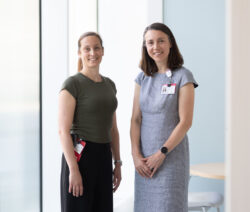
WRAP Director Hannah Brown, MD, and Co-Director of WRAP Without Walls Amy Yule, MD.
The gift from the Jack Satter Foundation is transformational for the WRAP program. The support will aid the community-based treatment program, expand the office-based clinical team to serve more patients, and continue to build the research program, including clinical trials and efforts to tailor treatment to individual patients. “We’re moving forward with initiatives we’ve been planning but have been limited in our ability to do before now,” Brown says.
The gift has allowed the psychosis program to hire a new research director and widen the reach of community education, especially about the danger of high-potency cannabis, associated with higher risk for psychosis.
The more researchers understand psychosis, the better they can help treat and prevent it. Vice Chair of Addiction Psychiatry Amy Yule, MD, says, “I’m excited about the flexibility the gift gives us to innovate as we identify effective strategies for engaging youth who are at high risk for schizophrenia because of substance-induced psychosis.” Yule is the co-director with Brown of WRAP Without Walls.
Jim, Matt’s father, is pleased that the gift will help more patients receive the type of care Matt has received at BMC. “Not all patients have the family support system that Matt has,” he says. “I often think about how they navigate treatment on their own. This is why the WRAP program is so important. It helps those who may have difficulty helping themselves.”
A Promising Future
With the support of his BMC care team and family, Matt, now 28, has been stable for more than three years. He will soon graduate from community college and plans to earn a bachelor’s degree and become an environmental consultant.
Jim, who participates with his wife, Joanne, in BMC’s family support program, offers this advice to any parent whose child is diagnosed with psychosis: “It’s a tough go, but you can’t give up,” he says. “Having a program like BMC’s, with lots of resources, makes a big difference. It’s not just about finding the right medication, it’s personal. Matt’s providers are very compassionate. It’s very important to a family to know the providers care about their child.”
Support our leading work for the people of Boston and beyond. Donate to Boston Medical Center today.